--define / explain the pure nobility of the Americas
indigenous people—
The concept of the "pure nobility" of the indigenous peoples of the Americas refers to a complex blend of historical socio-political structures, deeply rooted cultural philosophies, and European romanticized perceptions. [1]
Here is a breakdown of what this concept means across different contexts.
1. Traditional Governance and Elite Castes
Historically, many indigenous societies possessed literal systems of nobility and aristocracy that were highly structured and sophisticated. [1]
- The Aztec (Mexica) Pipiltin: A hereditary noble class that held exclusive rights to high government positions, priesthood, and military leadership. [1]
- The Inca Capac: An elite class composed of the royal family and relatives, who governed the vast empire through strict administrative hierarchies.
- Mississippian Chiefdoms: North American societies (like the Natchez) that maintained rigid class systems, where the ruler was considered a divine entity descended from the sun. [1, 2, 3]
2. Philosophical and Moral "Nobility"
In a spiritual and cultural sense, nobility refers to the core values that governed indigenous life, which stood in stark contrast to European feudalism.
- Relational Responsibility: Leadership was often earned through community service, wisdom, and the ability to provide, rather than raw power.
- Environmental Stewardship: A deeply ingrained philosophy that humans are part of nature, not its masters, dictating a respectful and sustainable relationship with the earth. [1, 2]
- Generosity as Power: In many cultures, such as the Pacific Northwest Potlatch tradition, a leader's status was measured by how much wealth they gave away to others, rather than how much they accumulated.
3. The European Myth: The "Noble Savage"
The phrase "pure nobility" is also closely tied to a Eurocentric literary and philosophical concept developed during the Enlightenment.
- Romanticized View: European thinkers like Jean-Jacques Rousseau romanticized indigenous people as living symbols of humanity's innate goodness. [1, 2]
- Critique of Europe: They used the imagined "pure" state of indigenous peoples to criticize corruption, greed, and artificiality in European civilization. [1, 2]
- The Reality: While meant as praise, this trope stripped indigenous peoples of their complex individuality, reducing them to simplified, static symbols of innocence. [1, 2]
To explore this concept further, let me know if you would like to focus on:
- The specific legal rights indigenous nobles maintained during early Spanish colonial rule.
- The spiritual principles behind indigenous leadership models.
- How the "Noble Savage" trope impacts modern media representations. [1, 2]
AI can make mistakes, so double-check responses



14 sites
- Terms and Issues in Native American Art (article)
This term is deeply problematic—and reveals the distorted lens of colonialism through which these groups have been seen and misund...
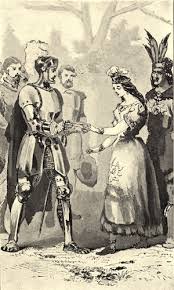
Khan Academy
- Casta
General racial groupings had their own set of privileges and restrictions, both legal and customary. So, for example, only Spaniar...
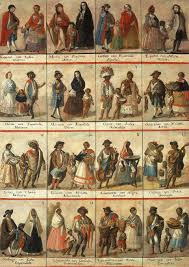
Wikipedia
- Nobility Definition for Early World Civilizations
Aug 15, 2025 — The Aztec Empire had a distinct social hierarchy where nobles (pipiltin) held power and privilege, being involved in governance an...
Fiveable
Show all
--You said: expand on relationship of purity of body
compared to today's society, careless regard of an individual’s energy—
When contrasting the ancestral indigenous concept of "purity of body" with contemporary modern society, the fundamental shift lies in how we view the human boundaries of spirit, matter, and the invisible energy fields that dictate well-being.
Traditional indigenous perspectives hold that the human body is a permeable, sacred vessel inextricably linked to the cosmos. Conversely, today’s hyper-individualistic society views the body largely as a mechanical tool or a commodity, leading to a profound and careless disregard for an individual's personal energy. [1, 2]
The Vessel vs. The Machine: Conceptions of the Body
Ancestral Purity of Body
In indigenous worldviews, purity of the body is not just about physical hygiene; it is about keeping the "inner fire" and spiritual frequency untainted. [1, 2]
- Porosity and Oneness: The body does not end at the skin. Indigenous frameworks reject Cartesian dualism (the Western separation of mind and body). What you breathe, think, eat, and touch alters your physical and spiritual composition. [1, 2, 3, 4, 5]
- Active Purification: Practices like fasting, sweat lodges, and smudging are structural protocols designed to scrub away dense or foreign energies, maintaining the body as a fit instrument for divine alignment and communal leadership. [1, 2]
Today’s Capitalist/Materialist Society
Modernity operates primarily on a biomechanical view of the human form. [1]
- The Body as an Engine: The body is treated as a machine to be optimized for maximum economic output or aesthetic perfection. Purity is superficial, often reduced to wellness consumerism, diet culture, or sterile medical isolation. [1]
- Severe Dissociation: Western thought positions the mind as the "pilot" and the body as a mere vehicle. This severs our instinctual awareness, forcing people to override physical distress, exhaustion, and intuitive warnings to meet societal expectations. [1]
The Careless Regard of Personal Energy
In traditional cultures, energy (Manitou, Wakan, Orenda) is a finite, real currency that dictates health. Today’s society treats energy as an infinite resource to be extracted or a fiction to be ignored. This carelessness manifests across three major areas: [1, 2]
|
Indigenous Energy Stewardship |
Modern Careless Regard |
|
|
Relational & Social |
Energetic Responsibility: Who you interact with matters. Intimate connections, shared spaces, and conversations transfer energy. Boundaries are treated as sacred architecture to prevent spiritual pollution. |
Hyper-Accessibility: Digital connectivity exposes the human nervous system to millions of strangers daily. People casually absorb collective trauma, rage, and algorithmic hostility through screens with zero energetic shielding. |
|
Environmental |
Reciprocal Exchange: A human never takes without giving back. Entering a forest or drinking from a spring requires an offering or an acknowledgment to maintain equilibrium with the land's life-force. |
Parasitic Extraction: Nature and environments are viewed as inert background noise or resources. Concrete cities, fluorescent lights, and electromagnetic pollution violently disrupt the human body's natural energetic grounding. |
|
Spiritual & Emotional |
Sacred Containment: Emotional states are contagious. Heavy emotions like grief or anger require communal ritual containment (e.g., the Navajo Blessingway) so they do not fester or infect the collective. |
Industrial Exploitation: Emotions are monetized. People are encouraged to constantly perform, outrage, or vent online, bleeding their vital lifeforce into data metrics while leaving their actual spirits entirely depleted. |
The Modern Consequence: Chronic Depletion
Because today's society lacks the language and structural rituals to honor personal energy, it suffers from a global epidemic of spiritual and physical burnout. Western medicine pathologizes this as "chronic fatigue" or "adrenal burnout," whereas an indigenous elder might diagnose it simply: the modern world has forgotten how to protect its fire, leaving its people's spirits scattered and dim. [1, 2]
To tailor this exploration, please let me know if you would like to explore:
- The specific protocols ancestral societies used to cleanse a person's energetic field after trauma.
- How the loss of the connection to the land specifically damages a person's somatic health.
- Practical ways to apply indigenous boundary-setting concepts to modern digital life. [1, 2, 3, 4, 5]


17 sites
- Mastering Moving Energy: An Indigenous Perspective on Mind ...
Nov 12, 2014 — We never invented the term “sustainability” as a concept to guide how we interact with the earth. Why? Simply put, the Indigenous ...


Center for Humans & Nature
- Ancient Wisdom, Modern Healing: Mental Health Lessons ...
Mar 17, 2025 — Feeling supported and connected to each other and strengthening our social bonds are great supports for mental health. Indigenous ...


www.ie.edu
- The Wisdom of Indigenous Cultures | Earth Day
Mar 20, 2025 — Like many Indigenous Peoples who practice a “take only what you need” lifestyle, the Maasai believe in respecting animals in both ...


Earth Day
Show all